Before exploring the deeper philosophy of this topic, let’s take a moment to examine the role of individuals in today’s society. I’m referring to individuals and the expectations placed on them within our society, and how they are treated. Understanding this is crucial for grasping the broader implications of our discussions.
According to societal views, a man is not inherently beautiful; rather, beauty relies on others’ appreciation and support. However, a man cannot afford to depend on external validation. Instead, he is expected to be strong and resilient, ready to lead in difficult times. When fear consumes those around him, he is expected to press on and move forward.
Let me delve deeper to provide you with a broader perspective. Throughout his life, he has often received more questions than appreciation. Additionally, he is not allowed to show his pain publicly, as that may label him as weak. No one asks about the magnitude of the challenges he faces alone, nor do they invite him to share his responsibilities. It is expected that he will manage everything that arises while also acting as a protector and provider. He always aims to do his best in every situation and is expected to succeed. Even when he is questioned, he is expected to remain calm and respond thoughtfully.
With time, beauty fades, but his strength continues to grow. He gradually breaks a little every day without telling anyone, so that his family, society, and country can progress without giving him any credit. Interestingly, he doesn’t even care to take credit for it because he is focused solely on those who matter most to him. A man who cannot fulfill his responsibilities is often not regarded as a true man in society, which can be quite harsh toward him.
I once read that a man must contribute and make sacrifices to become a valuable member of his family or community. From childhood, he learns to stop crying and suppress his emotions, which often makes him rigid as he focuses on becoming mentally and physically strong. As a result of this lifestyle, he sometimes forgets to live for himself. Society then questions why he seems insensitive and prefers to live in isolation. The issue is that he has neglected to incorporate duality into his life, which could provide a more balanced approach to living.
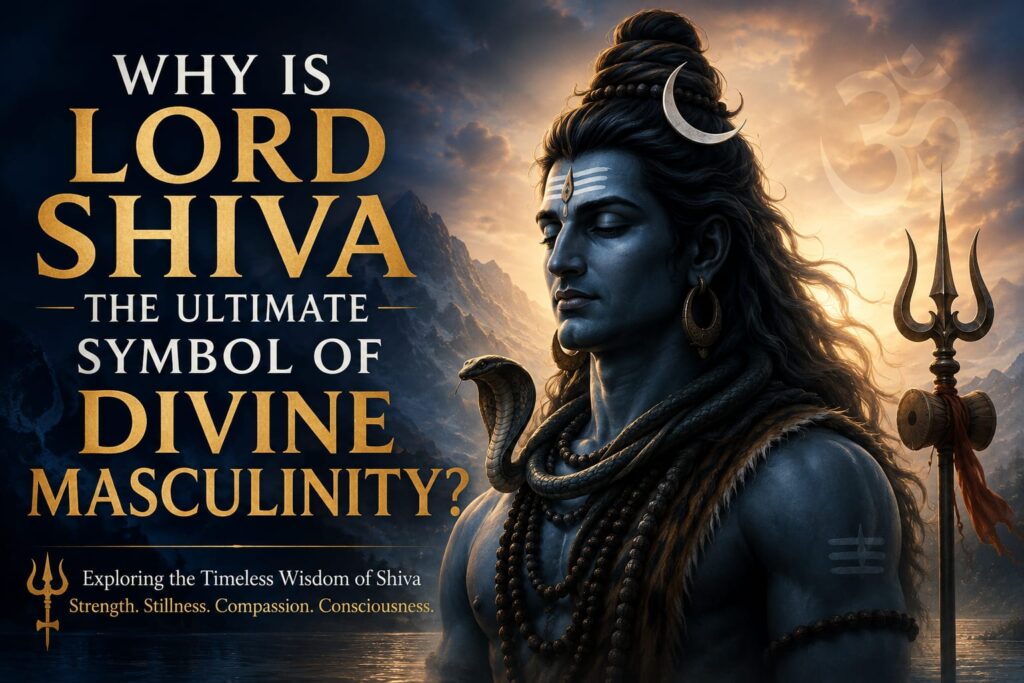
Lord Shiva has undergone many phases, some of which remain unknown. Nevertheless, he has mastered the duality within himself, making him the supreme force of nature.
His appearance may not align with traditional ideals of beauty, but there is a rational explanation for it. When ordinary people grasp the significance of his outer appearance, they start to appreciate the various facets of his character. He embodies both ultimate darkness and the ultimate source of light and knowledge. This duality reflects his true nature as the ultimate creator, protector, and destroyer. Despite the anger and intensity within him, Lord Shiva remains calm and composed in all situations, handling his responsibilities without seeking credit.
Most importantly, Lord Shiva doesn’t need anyone’s support; he is self-manifested and embodies the highest consciousness. In Shaiva traditions, Lord Shiva is the creator, provider, and destroyer of realities, whose purposes ultimately become meaningless. However, the essence of his masculinity is not about portraying himself as the most powerful deity in Sanatan Dharma. Instead, it involves exploring his inner dimensions and discovering inner peace amid the chaos surrounding him.
In a world that often equates masculinity with dominance, aggression, and external power, Lord Shiva offers a higher ideal. His strength is founded on self-mastery, his fearlessness stems from inner stillness, and his compassion is rooted in boundless love. This is why millions across generations have looked to Him not just as a deity, but as the ultimate symbol of divine masculinity. To follow the path of Shiva is not about gaining power over others; it is about mastering oneself and living a compassionate life in which everyone has value in the entire existence. Valuing and supporting others without seeking recognition or taking credit defines divine masculinity.